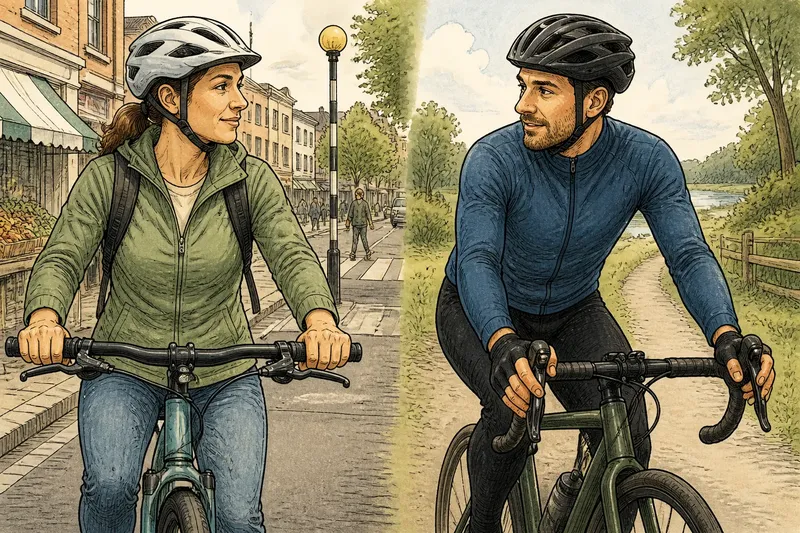
The Perfect Route Myth: Why Familiar Roads Can Be a Better Start
Familiar cycling routes make it easier to choose a ride for your time, purpose and mood, without spending the evening chasing an ideal route.
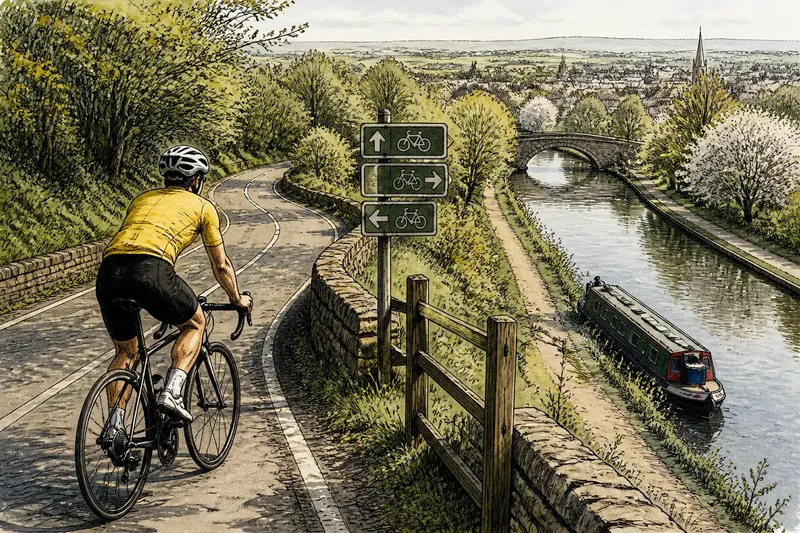
Which route should you ride when you have a little time and no appetite for a planning session? Familiar cycling routes are often a better start than hunting for the perfect line on a map. A known loop lets you decide what today’s ride is for, then adjust the distance or direction without turning the choice into a project.
Does every ride need an optimised route?
No. A route does not need to be new, maximally scenic or assembled from every quiet lane on a mapping app to be worthwhile. If you already know where the path narrows, where traffic builds and where you can turn home, you can spend less attention on basic navigation and more on how the ride feels.
Route-planning apps such as Komoot, Ride with GPS and Google Maps can be useful for exploring, checking surface notes or saving a course. But a promising line on a screen may still ask for unfamiliar junctions, a rough track or more time than you have. A familiar loop is a sensible default, not a refusal to explore.
That distinction matters on ordinary days. You may be squeezing in a ride before work, feeling a little tired, or simply wanting to get outside without making a major decision. Starting with a known route removes one decision while leaving room to change the ride itself.
How do I choose a route for the time I have?
Choose a route with an easy point to shorten or extend, rather than treating the full loop as a fixed appointment. Think in terms of available riding time, including the journey back and any likely stop, instead of picking a distance first and hoping it fits.
For a short window, choose a loop close to home with a clear turn-back point. If you have more time, add a familiar spur, such as a riverside path or a quiet road through a nearby park. A route with two or three natural exits gives you options if the ride begins to take longer than expected.
It also helps to remember what affects the pace of your own outing. A headwind, busy crossings, a chat with a friend or a puncture can change how much ground fits into the same window. Keep the plan forgiving. A familiar route makes it easier to take a useful shortcut without having to work out a new maze of turns.
Should I ride for a purpose or a destination?
Either can work; the useful choice depends on what would make the ride feel satisfying today. A destination gives the outing a clear point, while a purpose such as gentle movement, fresh air or time with a friend can make a loop feel complete without an errand at the far end.
If you are riding to a particular place, check the return route as well as the way out. A café, station or friend’s house can make a good turning point, but you still need a practical way home. If the outing is mainly for enjoyment, choose a loop that offers something you actually like: trees, open views, a smooth path or a familiar stretch beside water.
Try not to make the purpose more demanding than the day allows. If you have had a long day, a quiet circuit can be enough. If you want to practise riding with a companion, a route with room to ride at an easy pace may serve better than one chosen for a dramatic view or a challenging climb.
Is a familiar loop too boring?
Not necessarily. Repeating a route can make it easier to notice small changes: a new patch of shade, a different wind direction or a stretch that feels more lively at another time. Familiarity can also be comforting when you want the ride itself, not the puzzle of finding your way.
Still, a route that feels stale is a fair reason to alter it. Change the direction, add a side street you already recognise, or start from a different nearby access point. Small variations can bring a fresh feel without making the whole ride depend on unfamiliar navigation.
Say you have a familiar loop through a park and along a canal, and you want a modest change without extending the outing. You could ride the park section in the opposite direction, then return along the same canal path. The expected result is a different view of known places, with the rest of the route still easy to recognise.
How much novelty should I add?
Add only as much as suits your attention, confidence and available time. Novelty can make a ride feel rewarding, but it also brings decisions: unfamiliar crossings, uncertain surfaces and questions about where a path leads. You do not need to add all of them at once.
One simple approach is to keep most of a ride familiar and explore one new link. For example, you might follow your usual route to a park entrance, then take a signed shared path you have not used before. Notice where it meets the roads you know, and decide in advance whether you are happy to retrace your way if it does not suit you.
A paper map, a saved route on your phone or a simple note with the names of key turns can help when you do choose an unfamiliar section. Keep your phone accessible, but do not let screen prompts distract you at junctions. If you are unsure of a turn, stop somewhere safe before checking the map.
What if the route feels wrong?
Change it. A route plan is a proposal, not an obligation. If traffic feels heavier than you expected, the surface is unpleasant, or your energy dips, take a sensible turn home or pause somewhere suitable.
Before setting off, it can help to know one or two options for cutting the ride short. A bridge, station, main road or familiar junction may provide a clear way back, depending on your area. Choose alternatives that feel manageable to you, rather than assuming you must finish the original loop.
For riding in low light or on roads, choose a route that suits the conditions and your equipment. Local road rules apply, and any cycling lights or other equipment should be used in line with their instructions. If you are uncertain about a route’s suitability, ask a local cycling group or a qualified instructor familiar with the area.
What should I check before setting off?
A short check can make a familiar route more useful, especially when the day or conditions have changed. You do not need to plan every turn; focus on the details that could affect whether the loop still suits you.
- Available time: Choose a loop with an obvious shorter option if your schedule is tight.
- Purpose: Decide whether you want an easy spin, a destination, company or a change of scenery.
- Conditions: Consider wind, rain, daylight and whether the route includes exposed or slippery sections.
- Surface: Check that paths and tracks suit your bicycle and comfort, especially if recent weather may have changed them.
- Way home: Identify a familiar turn or connection that lets you shorten the ride without confusion.
- Company: Agree on a manageable pace and a turning point if you are riding with someone else.
These checks are prompts, not a demand to inspect every road in advance. If nothing important has changed, the route you already know may be ready to ride.
How can I make planning feel lighter?
Keep a small menu of routes rather than searching from scratch each time. You might save a short local loop, a longer outing with an easy exit and one route that includes a favourite destination. Give each a plain name in your app or on a note, such as “quick park loop” or “canal and shops”.
After a ride, make a brief note if something would help next time: a gate was closed, a crossing felt awkward, or a path was especially pleasant. Keep the note practical and local. You are recording useful decisions, not producing a perfect route description for someone else.
Familiar cycling routes are a strong starting point because they make the ride easier to choose and easier to adapt. When you want novelty, add it deliberately; when you want a straightforward outing, let a known loop be enough. The best route for today is often the one that gets you out the door and leaves you feeling comfortable with the way home.