A Quiet End-of-Ride Routine for Your Bicycle
A quiet end-of-ride bicycle routine helps you spot visible changes, keep small essentials together and leave your bike ready for its next outing.
Where should your bicycle go after a ride, and what is worth checking before you walk away? A quiet end-of-ride bicycle routine can answer both without turning a pleasant trip into a repair session. The useful habit is simple: choose a place to leave the bike, notice what looks different, and gather the little items that tend to wander.
There is no single right way to do this. A sheltered corner suits someone with a dependable storage spot; a quick handover works for a rider sharing space; and a portable routine helps when the bike has to be parked away from home. The best choice is the one you can repeat comfortably, while keeping mechanical work out of the moment.
Three ways to finish
Think of these as different ways to organise the last few minutes of a ride, rather than levels of care. You can combine them, but picking one as your default makes it easier to remember what happens next.
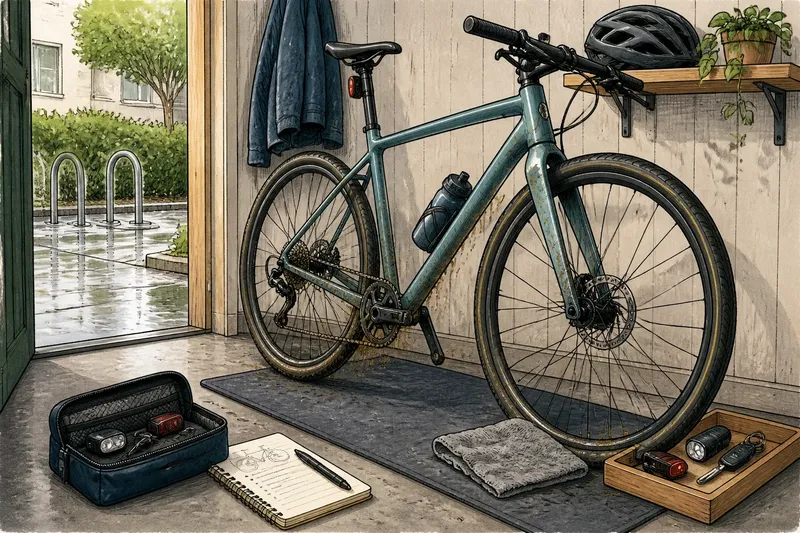
- The home landing spot: Wheel the bicycle into a familiar, sheltered place, such as a hallway, shed or covered bike area. This suits riders who store their bike at home and want a calm pause to notice mud, dampness or a new mark before putting things away.
- The quick handover: Secure the bike where it belongs, return shared or borrowed items, and take a brief look around the bicycle before leaving. This suits commuters, households with shared storage and anyone who has little time between arriving and moving on.
- The portable reset: Keep a small pouch for ride essentials and use it wherever you finish: at work, a friend’s home or a public cycle parking area. This suits riders whose bicycle does not always end the day in the same place.
Each approach has a different centre of gravity. The home landing spot gives you space and consistency. The quick handover prioritises a tidy transition. The portable reset keeps the routine adaptable when your destination changes.
Choose by your finish
Start with the bicycle’s usual destination. If it has a regular indoor or covered home, the landing spot is easy to make habitual. Put a floor mat or old towel beneath the usual parking area if wet tyres or a damp frame would bother you, and keep a soft cloth nearby for ordinary surface moisture. The aim is to leave the bike in a sensible place, not to clean every trace of a ride.
If you arrive at a workplace or shared rack, keep the routine brief and considerate. Lock the bicycle as you normally would, then check that your lights, helmet and removable accessories have not been left behind. Avoid spreading belongings across a corridor or storage area. A quick handover works best when the space is shared and another person may need to use it.
If your end point changes, a small zipped pouch can make the portable reset less forgettable. It might hold a removable front light, a key, a compact rear light or other small items you routinely take off the bicycle. Choose contents that match your own rides; the pouch is a place for essentials, not an invitation to carry tools you do not know how to use.
Where you park and store a bicycle should suit the space and local rules. For anything involving the bicycle’s condition, follow the maker’s guidance; if you are unsure whether a visible change affects safe use, ask a qualified bicycle mechanic before riding.
Notice without repairing
A post-ride glance is for noticing, not diagnosing. Look over the bicycle as you walk it to its resting place. You might spot a fresh scrape, a loose-looking accessory, a branch caught near a wheel or a tyre that appears unusually soft. You do not need to take anything apart or decide what caused a change on the spot.
Make a brief note if something looks different from what you remember. A note on your phone can say where you saw it and what you observed, in plain language: “new mark on the left side of the rear mudguard” is more useful than a guess about the cause. If there is nothing to report, there is no need to create a record just for the sake of it.
Say you usually leave your bicycle in a shared shed, and after a damp ride you notice a new streak on the frame and a light that is no longer attached to its bracket. You could place the bicycle in its usual space, note the streak on your phone, and put the light in your essentials pouch. The result is a clear reminder and fewer loose belongings, without attempting a repair or treating the mark as a mechanical diagnosis.
If you notice a change that makes you uncertain about riding, pause rather than trying a repair you are not equipped to do. A mechanic can assess concerns that a visual glance cannot settle. The routine stays low-risk precisely because it stops at observation and sensible decisions about what to do next.
Keep small items together
Loose essentials often cause more end-of-ride irritation than the bicycle itself. Decide where the items you remove will live, then return them to that place each time. A small tray near a home parking spot works for keys and lights; a zipped pouch works better when you move between destinations.
Useful items to gather might include:
- Removable front and rear lights.
- The bicycle lock key or combination reminder, stored securely.
- A helmet, gloves or reflective layer that you do not leave on the bicycle.
- A phone mount or other accessory you regularly remove.
- Your ride pouch, ready to pick up next time.
Keep the list personal. If your lights stay attached and your helmet comes indoors with you, those may be the only items to manage. A routine should reduce searching, not create a new collection of tasks or encourage leaving valuables where they can be taken.
Questions riders ask?
Do I need to clean my bicycle after every ride?
No. This routine is about putting the bicycle away thoughtfully and noticing visible changes, not giving it a full clean each time. If you want to remove surface dirt, use an approach suited to the bicycle and its manufacturer’s care advice.
Should I check every part before storing it?
A brief look for obvious changes is enough for this low-risk habit. It is not a substitute for maintenance or a mechanical inspection, and it should not turn into adjusting parts when you are unsure what they do.
What if I see something worrying?
Do not assume that a glance can tell you whether the bicycle is safe to ride. Set aside the uncertainty and ask a qualified bicycle mechanic for advice before using it if the concern could affect safe operation.
Where should I keep the routine’s small items?
Choose one consistent place that suits your storage: a tray by the bicycle’s home spot or a zipped pouch you can carry. Keep keys and valuables secure, and avoid leaving gear in a shared area unattended.
Make it easy to repeat
Keep the routine short enough to fit an ordinary arrival. A useful order is to put the bicycle in its proper place, notice anything visibly different, and return removable essentials to their home. If you are tired or carrying bags, do only the parts that make sense in that moment; a routine is a support, not a test.
To choose among the three approaches, ask where your bicycle usually finishes and whether you have a consistent place for its small items. A regular home spot points towards the landing routine; a shared destination suits the quick handover; changing destinations favour the portable reset. That choice is the heart of a quiet end-of-ride bicycle routine: leave the bike where it belongs, keep observations factual, and make the next departure easier to organise.
One small improvement can make the habit feel natural: put the cloth, tray or pouch where you already pause after a ride, rather than somewhere you have to remember separately. The bicycle then has a place to rest, and its essentials have a place to return.